
Field of expertise · Insights
Entrepreneur psychology
The psychology behind your business. How your patterns, history and energy shape your decisions, your team and your growth, and how your company shapes you in return.
A field developed by Dirk Jan Versluis, registered psychologist (NIP) and founder of Triunify.
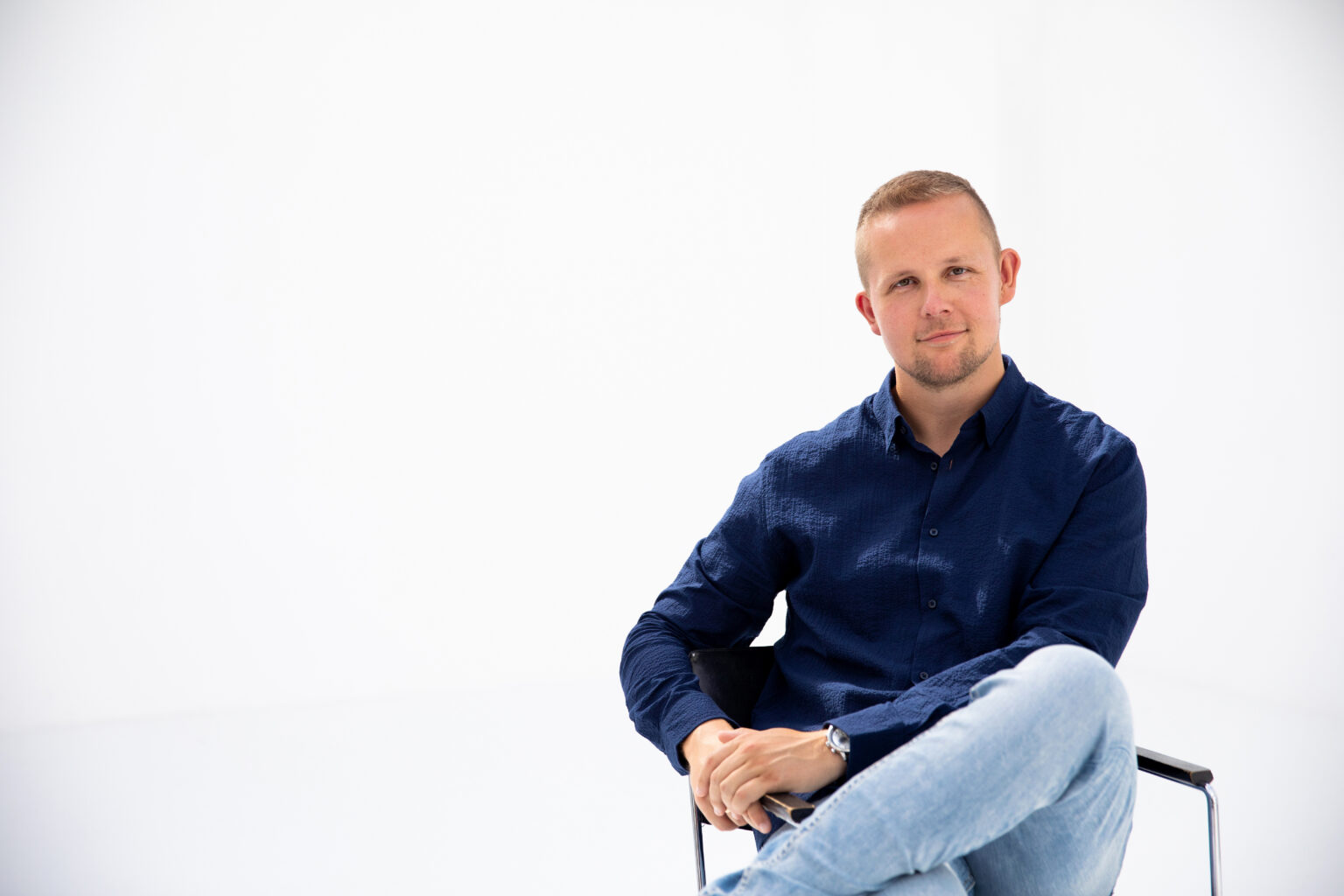
“Behavior is never the starting point. It is the end point of something deeper. If you want your company to grow, start with yourself.”
The model
Two minds that meet
An entrepreneur is not an employee with longer hours. Your identity, your income and your energy are tied to your company. And your company has a body of its own: a culture, a history, places where things flow and places where they are stuck.
Entrepreneur psychology looks at both, and above all at the place where they meet: in your decisions, your partnerships and your growth. Always within the wider system of family, partners, team and market.
Insights
Themes in entrepreneur psychology
Most founders do not get stuck on strategy. They get stuck on a deep pattern: a way of protecting themselves that once built the company, and now limits it. Sometimes that pattern grew out of trauma. Sometimes out of sensitivity, loyalty or a role taken on early. These articles follow those patterns from the founder, into the company, and back.
The founder’s deep patterns
Where your drive comes from, and why it can turn against you.
Highly sensitive entrepreneurs
Feeling more than you can carry, and using it as a compass.
Spiritual psychology for leaders
When the soul enters your work, and how to stay grounded.
Trauma-informed leadership
Leading people who carry wounds, without becoming their therapist.
The founder and the company
What happens when your patterns meet growth, partners and succession.
Company lifecycle stages
Growth comes in trimesters, and each asks a different founder.
The company as a living system
Your company carries patterns too. The ECA Leadership Framework makes them visible.
Instruments
How we work
Two methods we developed ourselves. Two others we apply as certified professionals.
Own method
ECA Leadership Framework
Seeing and sensing your company as a living system: where it flows, where it is stuck.
Own method
Deep Pattern Assessment
Maps the patterns that drive your personal and professional functioning.
Method
Brainspotting
Working with what lies beneath words, including trauma and old pain.
Method
Stakeholder Centered Coaching
Measurable behavioral change, with the people around you as the yardstick.

Talks and keynotes
Dirk Jan speaks about entrepreneur psychology
For business networks, leadership teams and conferences. Recognisable, well-founded and down to earth.
- What made you big now keeps you small
- Your company is a patient too
- Leadership and trauma
In depth
Entrepreneur psychology, explained
What is entrepreneur psychology?
Entrepreneur psychology is the psychology of people who run their own business: founders, owners, managing partners and self-employed professionals. It looks at how your personality, your history and your patterns play out in your company: in your decisions, your partnerships, your team and your own energy.
An entrepreneur is not an employee with longer hours. You carry final responsibility, your income and your identity are tied to your company, and there is often no one above you who says: that’s enough for today. That asks something different of your psyche, and so it asks something different of the person who supports you.
What does an entrepreneur psychologist do?
Formally, the entrepreneur psychologist does not exist. Psychology has recognized specializations, such as clinical, health and work and organizational psychology. There is no official category called “entrepreneur psychologist” or “leadership psychologist”.
And yet it is a field in its own right. In an entrepreneur, the psyche of a person and the dynamics of a company come together. What goes on inside you shows up in your business, and what grinds in your business affects you personally. Most disciplines look at one side: the person or the organization. An entrepreneur psychologist looks at both, and above all at how they interact.
Where a business adviser looks at numbers and structure, and a coach at your goals and behavior, an entrepreneur psychologist looks at the undercurrent. A business problem often turns out to be a personal pattern showing itself through the company.
When needed, that work goes deep. Sometimes a sharper look at your behavior is enough. Sometimes the brake sits deeper, in old experiences that still keep your nervous system on high alert. Then talking alone does not help, and we also work with brainspotting.
At Triunify, we are among the first to give this field its own language and its own methods.
Your company has a body and a psyche too
Entrepreneur psychology does not only look at the entrepreneur. A company or organization also has a body and a psychology of its own. It grows, gets out of balance, carries tension and sometimes trauma, just like a person. It has a history, a culture, an undercurrent and its own way of growing.
A reorganization that was never processed, a founder who left, a conflict swept under the carpet: a company remembers. That is why we look at two psyches at the same time: yours and your company’s. Read more about the ECA Leadership Framework.
What entrepreneurs come in with
Always on, close to burnout. Your mind never stops, rest feels uncomfortable and your energy leaks away. Read founder burnout: why entrepreneurs can’t switch off.
Conflict with your co-founder or business partner. A business partnership can be as intense as a marriage, especially when it goes wrong. Read conflict with your co-founder or business partner.
Lonely at the top. No one to really think things through with, no one who tells you the honest truth. Read lonely at the top.
Old pain that affects your business. What once protected you may now hold you back. Read leadership and trauma.
Leadership and growth. From solo founder to team, from founder to leader. Read about leadership psychology.
What to look for when you choose
More and more psychologists, therapists and coaches work with entrepreneurs. That is good news: the psychology of entrepreneurship is finally getting attention.
Recognition is where it starts. A good professional recognizes the typical tensions entrepreneurs face. But recognition alone is not enough. An entrepreneur psychologist should also have a real view on the relationship between person and company: how your patterns play out in your organization, and how your company in turn affects you.
- Does it go beyond recognition? Do you only get understanding for the pressure, or also an explanation of where it comes from and how it shows up in your business?
- Is there a view on person and company together? And has it been developed into a way of working, or does it stay at nice words?
- Can it go deep when needed? Sometimes the brake sits in old experiences. Then you want someone who can also work with trauma.
- Is there a professional code? Look for registration with a professional body, such as the Netherlands Institute of Psychologists (NIP): it means assessment, a disciplinary code and confidentiality.
Frequently asked questions
What is an entrepreneur psychologist?
A psychologist who specializes in the psychology of entrepreneurs: the interaction between who you are and how your business develops, with themes such as pressure, responsibility, partnership and patterns.
Is entrepreneur psychologist an official title?
No. There are recognized specializations, such as clinical or work and organizational psychology, but no official category of entrepreneur psychologist. It is a field in development. That is why it matters to check a professional’s training and registration.
Is this the same as a business psychologist?
Not quite. A business psychologist often works for organizations, for example on selection, absenteeism or team development. An entrepreneur psychologist works with you as an owner, and with the interaction between you and your company.
Do I need to have symptoms first?
No. Many entrepreneurs do not come with a complaint, but with a question: why do I keep running into this?
Do you work internationally?
Yes. Sessions take place online, or in person in the Netherlands, near Gouda.
Successful on the outside, stuck on the inside?
In a free 45-minute strategy session, online, we look at what is going on and whether we are a good fit. Confidential, under the professional code of the NIP.